It’s a staple in almost every kitchen in the world. Global usage of cooking oil is estimated at 200 million metric tonnes per year. Used cooking oil is a valuable commodity and can be purified and put to use in the production of many products.
With the enormous environmental benefits that come from recycling cooking oil, it seems madness that we still dispose of so much of the stuff into landfill sites or pour gallons down the drain, polluting and contaminating water systems.
The harm that non-recycled cooking oil can do
Did you know that 75 percent of all water company call outs are to deal with problems caused by oil, fat and grease? Annually, the costs associated with pouring cooking oil down sinks and drains stack up into the millions.
Pouring oil down the drain leads to a build-up of fat and grease which accumulates within the system and can cause major problems. Pipe blockages are inconvenient and costly to have resolved.
Millions of gallons of used cooking oil enter the oceans, disrupting ecosystems and killing marine life.
The benefits of recycling cooking oil
The production of cooking oil is resource-intensive and can harm the environment. For example, there is growing concern in countries like Malaysia and Thailand of the damage that replacing tropical forests with palm plantations for the production of cooking oil is doing.
The challenge is to make better use of used cooking oil, through recycling, to reduce the stress on the environment from taxing oil production processes.
Most of the cooking oil we use in our kitchens at home, or that which is used in restaurants, takeaways, cafes and food production plants, doesn’t become useless after it’s been used. It really just becomes dirty. All types of cooking oil are suitable for reuse and recycling.
Used cooking oil can be utilised in the production of animal feeds and be converted to biodiesel used to power vehicles or biofuels for heating and the generation of power. Biofuels derived from cooking oils produce no carbon monoxide and generally burn clean.
Recycling is one of the most efficient ways of handling used cooking oil and mitigating the risks of the oils contaminating the environment. As concern continues to grow around the world about the damage that mankind has done to the planet it is now, more than ever, that we must shift our energy usage towards safe, clean and renewable sources. Recycling cooking oil is just one way of achieving this.
Get in Touch
Contact our friendly team of experts to arrange a collection or just enquire about our services.
Call us today on 0800 091 0000
or email us on recycling@wastecare.co.uk
We are all aware that we need to recycle, cut down our consumption and try and live in a less wasteful way. But just how serious is our waste problem? Is it really such a problem? These nine shocking statistics about waste should get you thinking and ready to act.
1) The average UK household throws away around £470 worth of food that could be eaten every year. Food waste is a huge problem and throwing away all that edible food is a massive waste of money.
2) 18 million tonnes of waste are sent every year to a landfill site in the UK. Much of this could be recycled, composted or used again.
3) It takes 50 times more energy to make a battery than the power that you get from the battery. With such a high level of energy used, it might be worth considering rechargeable batteries and making sure you use them until they are definitely empty.
4) It takes 70% less energy to recycle paper than to make it from scratch. With recycling providing new materials and saving energy, it is 100% worth recycling paper wherever possible.
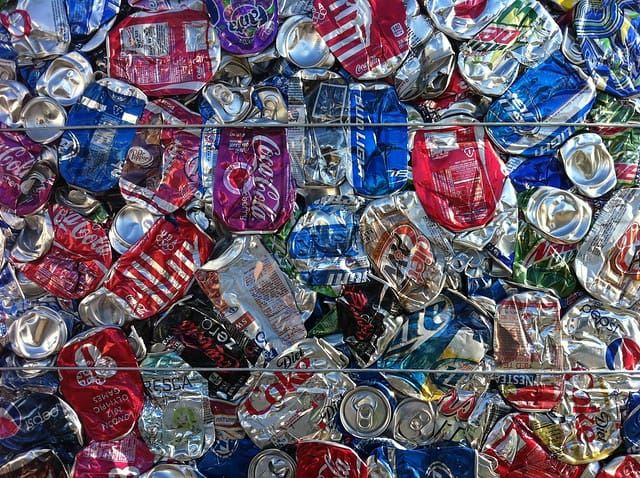
5) An average UK household uses 600 aluminium cans in just one year. Aluminium cans are totally recyclable, so there is no reason to throw them away. In the UK, that adds up to five billion cans year.
6) Around 80% of materials in landfills could have been recycled. From large items to paper, bottles and cans, we can all do more to cut down how much waste ends up in a landfill site.
7) We make 20 times more plastic than we did 50 years ago. Most of this can be easily recycled, but a shocking amount still ends up in landfill, where it takes over 500 years to decompose.
8) Businesses in the USA use about 21 million tonnes of paper each year. As it takes far less energy to recycle paper than to make it from scratch, businesses should be taking their paper recycling seriously.
9) The average household in the UK uses around 500 glass bottles and jars every year. Glass takes over 4000 years to decompose, and it is completely recyclable, so think twice before throwing them in the bin!
Sources:
http://www.wrap.org.uk/sites/files/wrap/Estimates_%20in_the_UK_Jan17.pdf
https://www.recyclingbins.co.uk/recycling-facts/#targetText=Every%20year%2C%2018%20million%20tonnes,to%20a%20UK%20landfill%20site.
https://www.sccmo.org/863/Recycling-Facts#targetText=Approximately%201%20billion%20trees%20worth,750%2C000%20copies%20made%20every%20minute.
http://www.recycling-guide.org.uk/facts.html
https://www.rubiconglobal.com/blog-statistics-trash-recycling/
Get in Touch
Contact our friendly team of experts to arrange a collection or just enquire about our services.
Call us today on 0800 091 0000
or email us on recycling@wastecare.co.uk
According to a recent study published in the Independent, men are less likely to recycle than women because they fear it will make them appear ‘less masculine’.
The study, carried out by an array of professors at Penn State University, discovered that many men believe they will be mocked if they do things such as purchase reusable bags, turn the air conditioning off to save money, or buy keep cups, with many stating they believe friends and peers would think they are gay.
A comprehensive conclusion
And this is not the first time that research has shown that men are less likely to recycle than their female counterparts.

A comprehensive study carried out by BusinessWaste.co.uk previously found that around 4 in 10 (39%) households say women are in charge of making sure that waste and recycling is sorted out properly, while less than 2 in 10 (19%) say that males are the ones that make the green household decisions.
Not only that, but studies have also found that men litter far more than women, which has also largely been attributed to the idea that being green and environmentally conscious is not regarded as a particularly masculine trait.
Other reasons why people don’t recycle
Of course, there are many more reasons why people don’t recycle. Although there are some people that feel they may be mocked by friends if they engage in an activity that could help in saving the planet, this is only the case for a minority.
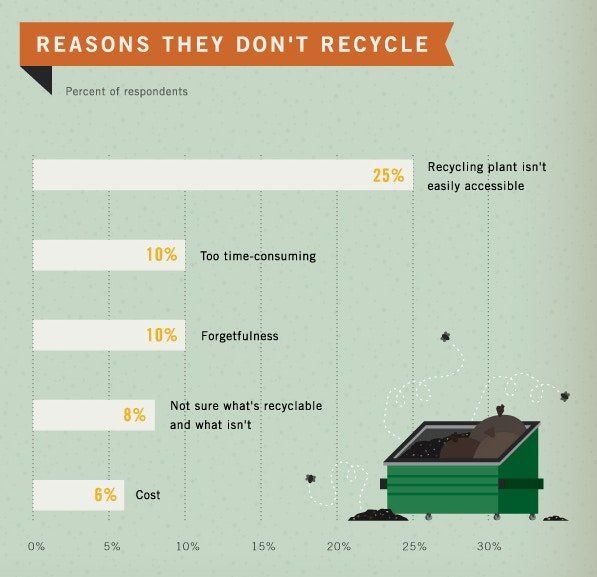
According to research, the top three reasons why people don’t recycle are:
1. It isn’t easy to do
The main reason why people are put off recycling is because it isn’t always convenient or easy. Recycling can be confusing – especially because of the numerous boxes and bin days – and so it is often easier to just throw things in the bin.
2. Takes too much time
Another key reason is that some people believe that recycling will take up too much of their time. In fact, this is the second top reason given by people in America.
3. They forget
Unsurprisingly perhaps, the third top reason is that people forget. Lethargy is something that many people will need to overcome if countries are to start hitting their ambitious recycling targets.
Get in Touch
Contact our friendly team of experts to arrange a collection or just enquire about our services.
Call us today on 0800 091 0000
or email us on recycling@wastecare.co.uk
WasteCare Group have forged a partnership with Sheffield Tanks & Drums to deliver a market-leading, closed-loop solution for Industrial packaging. The service offering includes a national collection, treatment and remanufacturing process for all varieties of industrial packaging.
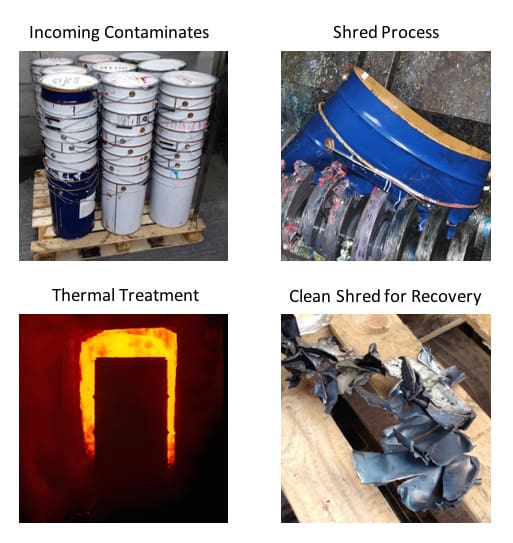
The treatment methods involved include three-stage industrial cleaning with a caustic solution for plastics and thermal treatment for any contaminated steel packaging. This process includes a 30-point wash where drums are de-dented, label’s removed and dried. Any non-washable drums have their lids removed and are treated through PackCare’s Avonmouth furnace to burn away all residues of previous contents. Drums are then shot blasted and returned to a raw steel shell, before going to ST&D for re-manufacturing and certifying.
The end result is a market leading finished product of remanufactured steel containers for UN for Solids, Liquids & Aerosols along with UN bung tops.

Get in Touch
Contact our friendly team of experts to arrange a collection or just enquire about our services.
Call us today on 0800 091 0000
or email us on recycling@wastecare.co.uk
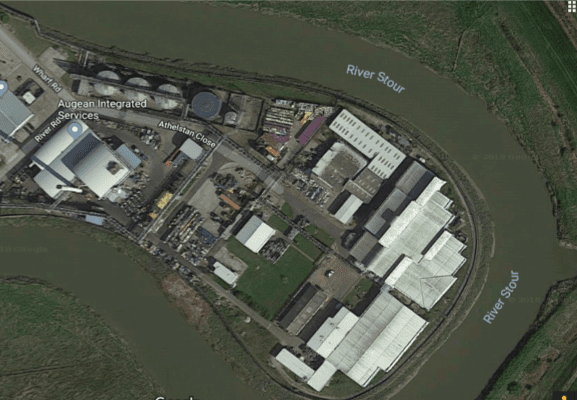
WasteCare have just acquired Augean’s site and High Temperature Incinerator located near Sandwich in Kent.
This follows a path of acquisitions that firmly focuses the Group’s resources in providing a national service for collecting and recycling most types of hazardous and speciality wastes on behalf of over 35,000 organisations throughout the UK.
Commenting on the acquisition, WasteCare Group’s Chairman, Peter Hunt, said: “previously, as a customer, we were very impressed with the team and the high standards that we witnessed on site. We plan to build upon this to deliver additional treatment capacity and additional services over the coming months.
Mr Hunt added: “our growth and success have been as a result of putting our clients at the centre of our operation combined with continuous investment in innovation and we see this as a key piece to the jigsaw, that being, to provide our customers a certified zero to landfill undertaking.”
High Temperature Incineration (HTI) is the vanguard technology for the secure disposal of difficult wastes which require total destruction. Certain wastes from the pharmaceutical, chemical, research, border control and medical sectors must be managed to ensure that they are completely destroyed and have no potential to be released to the wider environment.
The facility, located at the Discovery Park near Sandwich, is one of only three large scale hazardous waste HTIs in the UK. However, this facility is unique as it provides the highest levels of secure destruction by HTI technology whilst harnessing the heat from incineration and converting this energy into recovered steam which is returned back to the energy supply chain. This delivers the unique benefit of energy recovery from waste streams thus delivering the highest levels of recovery in the waste hierarchy.
HTI burns waste to temperatures up to 1,200oC ensuring complete combustion and the facility is configured to provide a flexible process to feed many different types of wastes in many forms, including:
– Solids (powder, pastes, pills, resins, sludges)
– Liquids (aqueous, solvent, slurry)
– Packaged wastes (boxes, drums, IBCs, tubs)
– Bulk wastes (tankers, ISO-freight)
– Confidential materials
– Clinical waste
– Controlled drugs
– Laboratory chemicals
– Reactive wastes
– Radioactive waste
The East Kent facility has the most advanced security systems in the country which provide several layers of protection 24 hours a day. At the heart of the facility is the secure storage building, which has continuous infra-red and CCTV monitoring for wastes to be securely stored prior to destruction.
The WasteCare Group now has over 500 staff operating across 17 facilities in the UK, who collect and recycle over 160,000 tonnes of hazardous and difficult waste annually. This is carried out through their national collection infrastructure where they conduct over 1,000 waste collections per day.
Other recent acquisitions for the company include Veolia’s physio-chemical treatment facility in Liverpool, along with both Greif Inc’s thermal treatment operation in Avonmouth and the BatteryBack compliance business in 2016.
For further information, please contact PR@wastecare.co.uk in the first instance.
Get in Touch
Contact our friendly team of experts to arrange a collection or just enquire about our services.
Call us today on 0800 091 0000
or email us on recycling@wastecare.co.uk
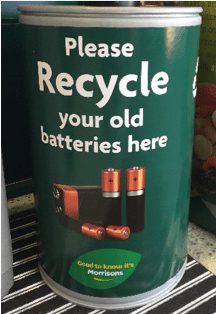
Over 400 Morrison’s stores across the UK have recently seen the installation of specially designed battery recycling containers in the style of the Morrisons’ brand.
With joint funding from Duracell, the new design is not only more in line with Morrisons current branding but also provides even greater clarity to customers with a clear battery recycling message.
Used portable batteries can be deposited easily in store for WasteCare to collect and recycle and in doing so contribute to helping the UK meet its portable battery recycling target for 2018 and beyond.
Get in Touch
Contact our friendly team of experts to arrange a collection or just enquire about our services.
Call us today on 0800 091 0000
or email us on recycling@wastecare.co.uk
A Wolverhampton based electroplating firm have been fined £180,000 despite numerous warning to clean up it’s act a court heard.
When the cyanide levels were uncovered, company challenged the results suggesting Severn Trent Water introduced it in their sampling equipment. Waste from the firm goes to Barnhurst Sewage Treatment Works in Oxley which discharges into both the Shropshire Union and Staffordshire and Worcestershire canals.
Mr Oliver Willmott, prosecuting on behalf of Severn Trent Water, said that in a sample taken on February 7, 2015, cyanide was found at more than two-and-a-half times the agreed limit for the firm.
Further samples taken on November 11 the same year recorded zinc at more than two times the limit and chemical oxygen demand (COD) at two-and-a-half times the legal measure. The Barnhurst works, which treats waste from across Wolverhampton and Perton, has a high zinc load given it takes waste from nine electroplaters, said Mr Willmott.
He added: “Because of the high concentration of these firms in the area, it is critical each one sticks to their limits. There is a risk that rather than being put to good use, sludge has to be sent to landfill.”
The company, which stopped using cyanide in 2009, also suggested that the cyanide finding was an error, a rogue result or a one-off event, with an old bottle of cyanide being found and emptied into the treatment pit, a practice it called ‘standard’. But Judge Barry Berlin said even if that was the case, it showed ‘a patent cavalier behaviour symbolic of a company not living up to its responsibilities’.
He ‘wholly rejected’ the notion that Severn Trent Water used contaminated bottles when collecting samples, describing their actions in the context of their past offending as ‘deliberate’. This was not a minor problem, as claimed by the company, but ‘an ongoing and significant one’, said the judge.
The firm pleaded guilty to three counts of breaching agreed limits on the contents of its liquid waste relating to zinc, COD and cyanide. The court heard the Company had failed to supply the court with a reliable set of accounts as requested. Those provided contained omissions and an unexplained swing in figures. Parts were ‘incredible,’ said the judge.
He fined the firm £120,000 and ordered them to pay £60,000 costs.
Get in Touch
Contact our friendly team of experts to arrange a collection or just enquire about our services.
Call us today on 0800 091 0000
or email us on recycling@wastecare.co.uk
Established in 1946, PackCare, the industrial packaging arm of the WasteCare Group has for many years focused on reconditioning IBCs, plastic drums, kegs and contaminated plastics.
The recent purchase of Greif’s steel drum recycling facility in Avonmouth has now enabled PackCare to provide a one-stop shop for all types of industrial packaging regardless of volume, type and contamination.
PackCare will shortly purchase Greif’s Avonmouth steel packaging recycling operation based in Avonmouth (pictured right). PackCare purchased the site as well as its state of the art recovery operations. With ambitious plans to expand the recycling capability PackCare are planning to expand the range of new services using this unique facility. Specialising in contaminated metals and all types of packaging PackCare is able to provide a full cradle to cradle solution whilst investing in additional waste recycling activities and niche processes on the site through the PackCare brand.
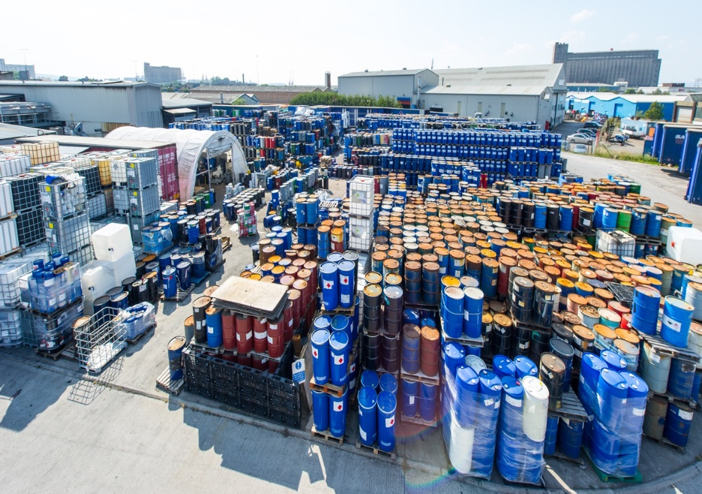
Recent Environment Agency guidance has restricted the disposal of packaging to unlicensed re-conditioners, via scrap processors and into landfill. The Avonmouth facility provides the only licensed thermal treatment process dedicated to steel drums and metal packaging, whilst our Leeds facility enables us to decontaminate all forms of industrial plastic packaging.
PackCare’s Zero to Landfill policy has maximised recycling and recovery, returning real value to our customers; whilst we offer rebates for good reusable packaging. Utilising WasteCare’s national transport fleet and licensed waste management facilities enables the company to provide clients a cost effective, one-stop solution for all types of industrial packaging.
Our “R” coded IPC licensed facility offers the best available technology in Europe for processing contaminated packaging.
Additional Processes
We aim to use the thermal process for a number of other recycling processes for products that in the past have been considered difficult or that have been included in WM3 legislation, to include products such as: Paint cans, resin pails, oil Filters, domestic batteries, grinding sludges, aerosols and most other forms of contaminated metallic packaging.
Further developments to the Avonmouth site including paint/ink/coatings recovery. Through an automated de-watering process, packaging is segregated into water and solvent based materials that are mechanically removed from the packaging which is then bulked onto the recovery processes. Solvent based materials are blended and used for as Cement Kiln fuel, whereas water based materials are de-watered and made into a re-useable filter cake.
Plastic packaging will be forced dried shredded with any metals removed, the plastics are then further agitated through a screening system to remove residual paint and allow full recovery of the plastic packaging. At some point we will be able to encourage plastic can manufacturers to use this recyclate within the manufacture of new packaging.
PackCare is accredited to ISO9000 & ISO14000 standard.
For further information please visit www.packcare.co.uk
Get in Touch
Contact our friendly team of experts to arrange a collection or just enquire about our services.
Call us today on 0800 091 0000
or email us on recycling@wastecare.co.uk
Rules governing the depollution of end of life fridges and freezers appear to be a factor in an increased number of the white goods being fly-tipped, according to one local authority in the West Midlands.
Lichfield district council has noted that 2015 saw an increase in the number of fridges and freezers being left on pavements or fly-tipped across its districts.
As happens across much of the UK, the public appear to be leaving old fridges and freezers outside their properties for itinerant collectors to remove. But, now the collectors, many of which operate illegally, are simply turning up and either removing the compressors outside the home, or taking the fridge, then removing the compressor and dumping the carcass.
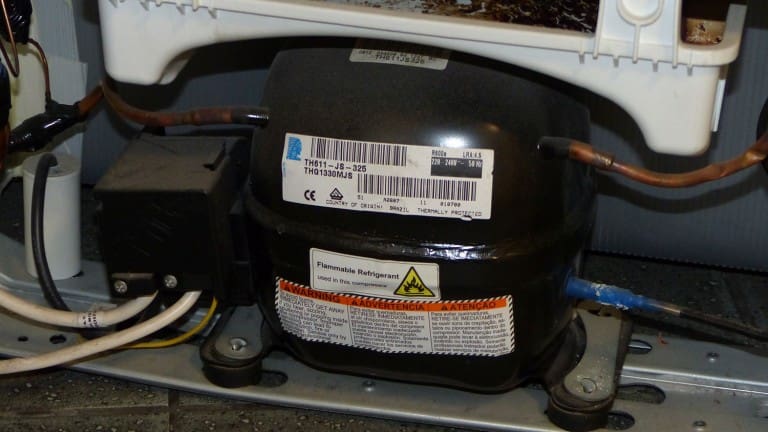
This is because of the increased costs in handling fridges and the fact that not all metal recycling sites will take them in. And, there is the low value of metal which has seen the price of light iron drop to as low as £20 a tonne.
Some scrap yards will also pay £20 a tonne but then make a deduction if the load has a lot of waste materials in it because of the cost of disposing of these. So, the itinerant collectors find it easier to instead just take the compressors which can have a value of about £200 a tonne.
The Environment Agency position is that the compressor and cooling circuit on the back of a discarded fridge contains oil and refrigerant, both of which can cause pollution and harm to the environment. “Therefore they must only be removed (degassed) using appropriate equipment and by suitably trained staff at a permitted facility. Fridges must also be stored and handled appropriately to prevent damage to the cooling circuit or compressor prior to treatment,” the EA says.
Get in Touch
Contact our friendly team of experts to arrange a collection or just enquire about our services.
Call us today on 0800 091 0000
or email us on recycling@wastecare.co.uk
An online trading company, Babz Media operating from Perivale, London has become the first business to be prosecuted for breaching the battery recycling regulations.
And, the company has also been fined for non-compliance with producer responsibility legislation covering packaging and WEEE (waste electrical and electronic equipment).
The company pleaded guilty on 6th August 2015 at Ealing Magistrates’ Court in West London to failing to register with the Environment Agency and a producer recycling scheme for packaging waste, waste batteries and electrical waste. The company also pleaded guilty to avoiding the cost of financing the collection and recycling of the three waste streams between 2011 and 2013.
As well as being ordered by the court to pay a total of £45,500 in fines, they were also required to pay £8,724.98 to the Environment Agency for the avoided registration fees and prosecution costs.
Hannah Wooldridge, senior Environment Agency officer said: “This case shows that businesses must consider all aspects of regulation, and that environmental aspects are an important part of due diligence at all times. These regulations can affect all types of business no matter the method of selling. Online trading does not excuse companies from being compliant with the law.”
Get in Touch
Contact our friendly team of experts to arrange a collection or just enquire about our services.
Call us today on 0800 091 0000
or email us on recycling@wastecare.co.uk
New Hazardous chemical classifications come into force today (June 1). The European Classification, Labelling & Packaging (CLP) Regulations will take effect in the UK bringing us in line with the rest of the world. As part of the Global Harmonisation System (GHS) standardising chemical classifications, these new regulations form part of a United Nations agreement back in 2002.
New hazardous labelling – gone have the orange labels
Although waste materials are exempt from some aspects of CLP, the classification of waste must be based on the EU Chemical Classification legislation. The hazard pictograms have already changed in line with this.
To reflect the changes in dangerous substances directive, WM2, the guidance on the classification of waste has been superseded by WM3 Waste Classification & Assessment – Technical Guidance; this new system of chemical classification is based on hazard classes, categories and statement codes rather than previous risk phrases and categories of danger.
In order that WasteCare and their clients comply with the new regulations the company has re-evaluated the hazard codes of over 2,000 different waste streams that the company handles, identifying the new codes and assessing any changes to hazard status. If you have any concerns as to the correct identification, classification or labelling of waste please visit the Government website: www.hseni.gov.uk/new-clp-symbols.pdf or contact our technical team, headed by Stuart McNish: email Stuart.McNish@wastecare.co.uk

What impact do these changes have on you?
When CLP methodology is applied, some waste materials which were previously considered non-hazardous waste may now be regarded hazardous. For the WasteCare technical team to reassess your waste streams in line with WM3 Technical guidance we’ll need to review all components of your waste. It is always helpful if you have MSDS sheets, details on how your waste is produced, chemical composition and any other information that will help us to assess your waste. Where necessary samples will have to be taken and analysed.
The WasteCare technical team are at hand to offer you guidance and will make every effort to ensure you remain compliant.
Your paperwork will change from H Codes to new CLP Hazardous Property or HP codes on June 1st, these are determined by the Hazardous statements and thresholds of the hazardous properties. Similar to the old H Codes, some new properties have been added and some materials will change their classification.
Don’t forget – we are here to help.
Get in Touch
Contact our friendly team of experts to arrange a collection or just enquire about our services.
Call us today on 0800 091 0000
or email us on recycling@wastecare.co.uk
BatteryBack is fully charged and operating. Morrisons and Bradford Metropolitan District Council have launched a joint BatteryBack initiative at stores, schools, public buildings and civic amenity sites (see story below) and more than 200 BatteryCans have now been ordered by retailers, local authorities and large commercial premises.
As a result – and following the Government’s indication of its thinking in relation to the new Battery Recycling Regulations – we had ordered a further 1,000 BatteryCans for immediate distribution.
The BatteryBack website (www.batteryback.org) offers a user-friendly interface where individuals can find over 1,000 free collection points for all types of batteries by simply entering their postcode. These points are primarily located at civic amenity sites, with plans to expand as more sites become available.
The UK is committed to significantly boosting battery recycling, targeting a rise from the historical rate of 2.8% annually to a minimum of 45% by 2030. To meet this ambitious goal, it is estimated that more than 100,000 collection points will be required nationwide.
WasteCare is at present the only recycling company in the UK offering the free BatteryBack solution. Consequently, we aim to open at least 2,000 trial sites by October of 2012, when the Government’s draft Regulations are expected to be published. Thereafter, the roll-out will be speeded up.
Get in Touch
Contact our friendly team of experts to arrange a collection or just enquire about our services.
Call us today on 0800 091 0000
or email us on recycling@wastecare.co.uk