Paint: The Hazardous Waste Hiding in Plain Sight
A long-overlooked problem is finally getting the attention it deserves, and the paint industry deserves real credit for taking the lead.
Most people would not think of a tin of leftover emulsion as hazardous waste. But depending on what is in it, that is exactly what it is, and the scale of the problem across the UK is considerably larger than you might expect.
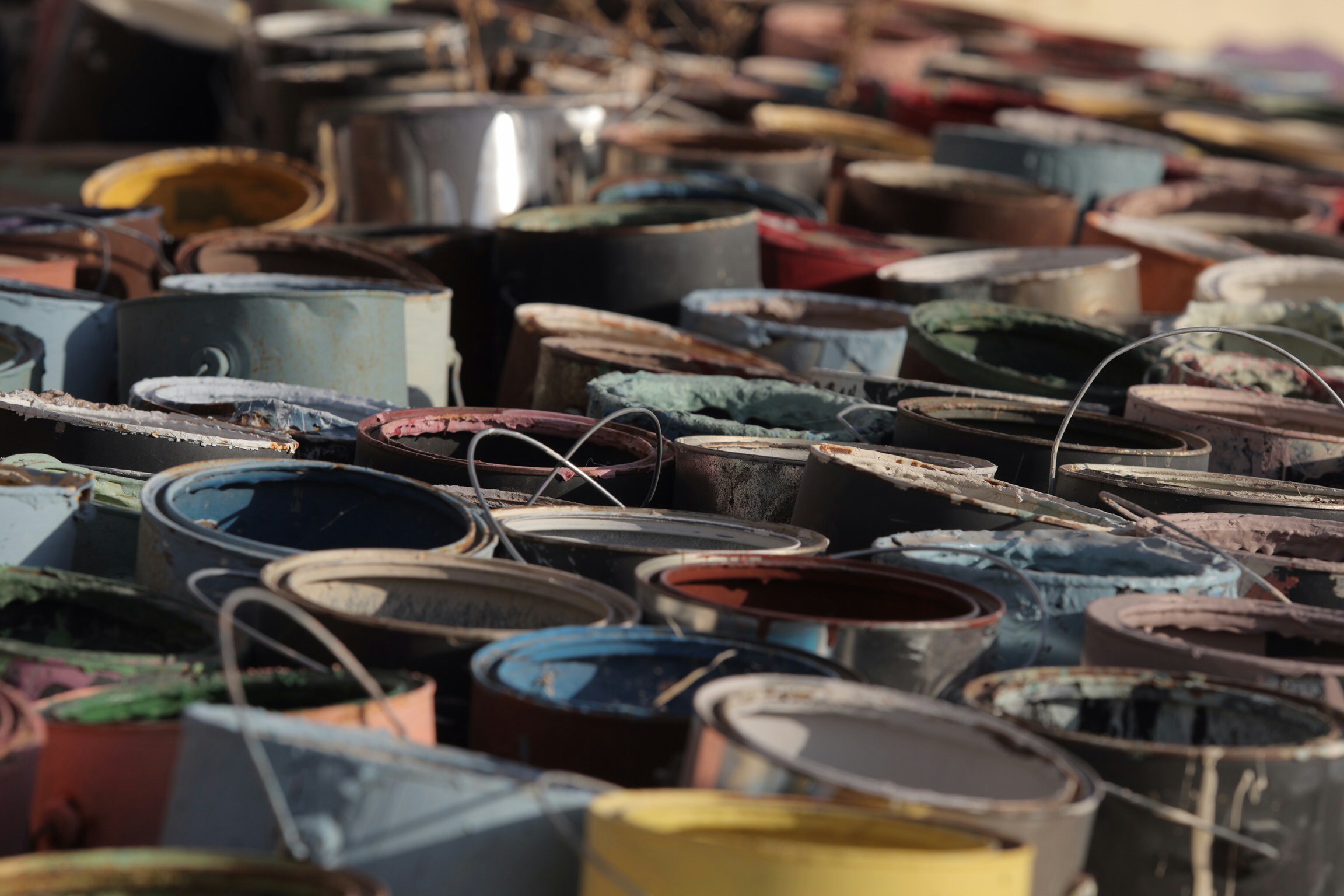
Solvent-based paints, which include gloss, satinwood and many specialist coatings, are classified as hazardous waste under UK regulations. They contain volatile organic compounds, heavy metals and other substances that can cause serious environmental harm if they end up in landfill or are poured down a drain. Even water-based paints, while less acutely harmful, should not simply be binned or washed away. Yet that is precisely what happens to the vast majority of paint waste generated in this country every year.
The numbers are striking. An estimated 50 million tins of paint are sitting unused in UK households alone. Of the paint that does make it to a household waste recycling centre, around 98% ends up incinerated or sent to landfill. Meanwhile the UK paint sector produces around 1.9 million tonnes of CO2 equivalent annually, and a significant portion of that footprint is tied directly to the disposal of wasted paint and the ongoing manufacture of virgin material to replace it.
This is a circular economy problem that has been hiding in plain sight for years. And it is one that the paint industry is now taking seriously.
The British Coatings Federation Steps Up: PaintCare
The British Coatings Federation has developed PaintCare, an industry-funded initiative with an ambitious goal: to increase paint reuse, remanufacture and recycling rates from their current level of around 2% to at least 75% by the early 2030s. That is a transformational target, and the fact that it is being driven voluntarily by the industry rather than mandated through regulation makes it all the more noteworthy.
In 2026, PaintCare launched a regional pilot in the West Midlands, enabling consumers and tradespeople to return leftover paint and packaging at participating retail sites. The pilot is designed to test and refine the takeback model before a wider national rollout, and it represents a meaningful first step toward making paint recycling genuinely accessible rather than a postcode lottery.
What makes this initiative particularly worth celebrating is that there is no regulatory requirement driving it. Paint does not currently sit within an extended producer responsibility framework that compels manufacturers to fund its end-of-life management. The BCF and its members are acting ahead of any such obligation, and that voluntary commitment deserves recognition.
An Encouraging Pattern Emerging
PaintCare is not the only example of an industry identifying a gap in the current regulatory framework and choosing to act rather than wait. Podback, the coffee pod recycling scheme developed by Nespresso and Jacobs Douwe Egberts, followed a similar path. Coffee pods were not covered under any mandatory producer responsibility obligation, yet the volume of pods going to landfill each year was significant and growing. Rather than waiting for legislation to catch up, the industry built its own takeback and recycling infrastructure, partnering with local authorities and household waste recycling centres to create accessible collection points nationwide.
The parallel with PaintCare is a strong one. Both involve a product category generating substantial waste volumes that fall outside existing regulatory frameworks. Both involve industries choosing to fund and build solutions voluntarily. And both demonstrate that the circular economy does not have to wait for government mandates to make progress.
It is a model worth acknowledging, and encouraging. When industries take responsibility for the products they put on the market without being compelled to do so, it tends to produce better, more practical outcomes than regulation alone. It also builds the kind of infrastructure and expertise that makes any future regulatory framework considerably easier to implement.

Wastecare’s View
We welcome the progress PaintCare is making and applaud the British Coatings Federation for driving this forward voluntarily. Too often in the waste sector, meaningful change only happens when regulation demands it. Here is an example of an industry identifying a problem, funding a solution and building the infrastructure to deliver it. The Podback model showed that this approach works. PaintCare has every reason to be equally successful.
Paint is a waste stream we know well. We collect significant volumes of both water-based and solvent-based paint, separating the two streams for appropriate treatment, alongside steel and plastic containers which are processed separately. The complexity of handling paint waste responsibly is real, and the PaintCare scheme’s ambition to build a consistent national takeback system is exactly the kind of infrastructure investment the sector needs.
We will be watching the West Midlands pilot with genuine interest and hope to see it expand quickly. The target of 75% reuse and recycling by the early 2030s is ambitious, but with the right collection infrastructure and industry commitment behind it, it is well within reach.
What Businesses Need To Do Now
• Solvent-based paints (gloss, satinwood, specialist coatings) are classified as hazardous waste and must be managed through a licensed hazardous waste contractor
• Water-based paints should not be disposed of in general waste bins or poured down drains seek an appropriate disposal route
• Keep water-based and solvent-based paints separate; mixing the two streams complicates treatment and reduces recovery options
• Businesses generating paint waste regularly should have a compliant collection service in place, with hazardous waste consignment notes issued for solvent-based streams
• Watch for the PaintCare West Midlands pilot expanding nationally as this will create more accessible takeback options for tradespeople and businesses
Wastecare collects and treats both water-based and solvent-based paint waste from businesses across the UK.
Contact our team at wastecare.co.uk or call 0800 091 0000 to arrange a collection.
What Happens During Plastic Waste Recycling and Recovery?
Once plastic waste leaves your site, it moves into treatment as part of the wider plastic waste recycling process. For general packaging and rigid plastics, this usually means sorting by polymer type, cleaning where needed and preparing material for processing. For industrial containers, the process is more involved. Empty drums and IBCs are washed using high-pressure hot water and a mild cleaning agent, then leak tested against UN standards to work out whether they can be reconditioned for reuse rather than broken down entirely.
Containers that pass this test go back into circulation, often with a rebate paid to the business that sent them for treatment. Those that don’t meet the standard are chemically cleaned, crushed and shredded. The plastic is then granulated and sold on to be made into new plastic products, while any metal parts, such as IBC outer cages, are recovered separately and melted down for reuse. This is the process behind Wastecare’s industrial packaging recycling and reconditioning service and it means that even containers unsuitable for reuse still end up as raw material for something new rather than heading to landfill.
Separating The Metals From The Plastics
Here is where the science gets clever. Even some plastic pods contain small aluminium lids, so simply sorting by bag colour is not enough at this stage. The pods pass through something called an eddy current separator. Without getting too deep into the physics, this machine uses rapidly changing magnetic fields to create a reaction in non-ferrous metals like aluminium that physically repels them away from non-metallic materials. The result is a clean, reliable separation of aluminium and plastic, even when they are thoroughly mixed together.
Two Streams, Two Destinations
The plastic pods (made from polypropylene, or PP) are bagged and sent for recycling into new plastic products.
The aluminium from your recycled pod could be back on a supermarket shelf as a brand new pod within months. Compacting reduces the volume, which cuts the carbon footprint of transporting it and also improves the efficiency of the smelting process, meaning more aluminium is recovered from the same amount of material. That aluminium is then recycled back into new products, and in many cases finds its way back into the very coffee pods sitting on a supermarket shelf right now.
So next time you pop a pod in the machine, it is worth knowing that with a little effort on your part, it could be back on a shelf as a brand new pod within months. The infrastructure is there, the process works, and every pod you recycle rather than bin makes a genuine difference.
Why This Works — & How It Started
Aluminium is one of the most energy-efficient materials to recycle, the process uses around 95% less energy than producing virgin aluminium. For a material used in billions of pods every year in the UK alone, the environmental stakes of getting recycling right are significant.
The Podback scheme is a good example of an industry acting ahead of regulation. Coffee pods were not covered under any mandatory producer responsibility obligation when the scheme launched, yet the volumes going to landfill were growing. Nespresso and Jacobs Douwe Egberts built the scheme; Wastecare built the processing infrastructure to make it work at scale. It is the same voluntary commitment that PaintCare is now making for paint waste, industries acting because the environmental case is clear, not because the law demands it.
Want to start recycling your coffee pods? Visit podback.org to find your nearest drop-off point and pick up your free collection bags.